The complete guide to Chamonix

Most ski resorts were built for skiing, but Chamonix was famous before skiing even existed. Holding a pioneering place in alpine history, Chamonix hosted the first ascent of a 4000m peak, the world's oldest mountain-guide company, and the very first Winter Olympic Games.
That heritage still sets the tone: Chamonix is a proper French town with a train station, famous boulangeries and a Saturday market, the special sauce is that all of that Frenchness occurs in the shadow of Mont Blanc – the highest mountain in Western Europe.
The skiing is arranged accordingly: not one linked circuit, but four distinct areas strung along the valley, each hitting its own niche. Towering over it all looms the Aiguille du Midi cable car which climbs to 3842 metres. Visitors flock to ‘the Midi’ for the jaw-dropping views, mountaineering escapades, or a ski along the Vallée Blanche.
We asked Gillian Rosh, a newly minted Chamonix resident, ski industry insider and mountain enthusiast, to help us tell the story of this incredible place. Gillian works with Opening Up The Outdoors (OUTO) to bring together communities and key actors in reimagining a more inclusive outdoor industry. She is passionate about creating impact by tackling barriers to access and supporting those historically excluded from outdoor spaces. You can also find her executing Picture’s sustainability mission: addressing traceability and transparency. When stepping back from the grindstone, you’ll find Gillian skiing Grands Montets, trail running (slowly but surely!), or eating French cuisine.

A brief history of Chamonix
Chamonix’s story begins not with skiing but mountaineering. In August 1786, Jacques Balmat and Michel-Gabriel Paccard stood on the summit of Mont Blanc. They were the first humans to do so and effectively founded modern mountaineering. Within decades, the valley became the stomping ground for a heady era of alpine exploration, drawing climbers, scientists and romantics seeking out the best view in the Alps.
The Compagnie des Guides de Chamonix, established in 1821, is the oldest mountain-guide company in the world and still operates today – a direct line from the early pioneers to the off-piste guides who lead the Vallée Blanche descent every winter.
Skiing arrived in Chamonix from Norway around 1892, decades before most Alpine resorts had seen a ski. The town was already reachable by train from 1901. And in January 1924, Chamonix hosted the first Winter Olympic Games – originally staged as the "International Winter Sports Week" and retrospectively designated the inaugural Winter Olympics by the IOC in 1926. Around 258 athletes from 16 nations competed before 10,000 spectators. The centenary was celebrated in 2024.
The racing heritage continued: the Kandahar, first held here in 1928, is an international ski racing competition combining downhill and slalom. Today, World Cup races run on La Verte des Houches – one of only two World Cup downhill pistes in France, alongside Val d'Isère.
Chamonix is also, remarkably, reported by the official tourism site to be the only municipality to have sent an athlete to every Winter Games since 1924. This detail speaks to the depth of talent locally and this town's relationship with winter sport.
The valley: village by village
Chamonix is not one ski area but a string of villages and lift bases spread across roughly 16 kilometres of valley. Understanding the geography is half the battle, but luckily there are some excellent overhead landmarks to get your bearings.

Classic Chamonix landmarks: Mont Blanc and the Aiguille du Midi. Photo Credit: OT Chamonix Mont Blanc
Chamonix town (1035 m). With a pedestrianised centre and the widest choice of hotels, restaurants and nightlife, plus the Brévent, Aiguille du Midi and Montenvers stations close by Chamonix proper is favourite for first-timers, nightlife lovers and non-skiers.
Les Praz (1060 m). A pretty, quieter village three kilometres up the valley at the foot of the Flégère lift. Golf-course views, a residential feel and sunny south-facing skiing above. If you want Chamonix without the hustle and bustle, this is a great option.
Argentière (1250 m). A freerider’s paradise – higher, colder and featuring the impressive terrain of Grands Montets, Argentière has a strong local and seasonaire scene. If you're here for the skiing above all else, you probably already know this village's name.

Le Tour (1450 m). A small, charming hamlet at the head of the valley under the gentle, sunny Balme slopes – a good beginner, intermediate and family base. The Col de Balme, on the Swiss border, offers views over both the Mont Blanc massif and the Valais.
Vallorcine (1260m). Over the Col des Montets towards Switzerland, linked into the Balme area by gondola and reached by the Mont Blanc Express train. Quiet, traditional and tree-lined – excellent for bad-weather skiing.
Les Houches (1,000 m). The family-friendly area at the valley entrance: meandering forest pistes, the Kandahar World Cup run, night skiing on winter evenings, and mountain restaurants with genuine character. Important note: Les Houches is covered by the Mont Blanc Unlimited pass but not by the standard Chamonix Le Pass – a genuinely useful thing to know before you buy.
Chamonix skiing: four ski areas, four personalities
Except for Brévent and Flégère, Chamonix's ski areas are not linked to each other – you'll take a bus or the Mont Blanc Express train between them. This requires a bit more planning than a single-circuit resort, but the reward is variety that few ski resorts can match.
Brévent–Flégère. The sunny one. South-facing slopes above the town and Les Praz, linked at altitude, with wide-open views directly across the valley to Mont Blanc. Groomed cruising at its finest – this is where most visitors spend their first day, and where many spend most of their holiday. The panorama from the top of Brévent, with the Aiguille du Midi and Mont Blanc filling the sky, is one of the great sights in skiing.
Best for beginner and intermediate skiers and snowboarders who want to take their riding to the next level. Expert skiers will also find lots of challenging terrain to sink their teeth into.

Grands Montets. The serious one. Above Argentière, north-facing and snow-sure, with steep, varied terrain from the Bochard gondola area and exceptional off-piste. The glacier access and north-facing aspect mean reliable conditions well into spring. Note: the top cable car (to 3,275 m) is currently not operational following fire damage in 2018 – verify the latest lift status before your trip, as reconstruction plans are under discussion.
Best for advanced and expert skiers and snowboarders, and powder-hounds with a taste for steep, north-facing descents.
Balme (Le Tour–Vallorcine). The gentle one. Sunny, wide, tree-lined slopes on the Swiss border. The most relaxed atmosphere on the mountain, and often the best option on stormy days thanks to the shelter provided by the trees.
Le Tour and Vallorcine are best for intermediates, beginners and families.

Les Houches. The local one. Forested, family-friendly pistes with a distinct personality. Home to the Kandahar World Cup run (La Verte des Houches – 3.3 km long, 870 m vertical), which is open to the public and provides a test of endurance and strength for strong skiers. Night skiing sessions run on winter evenings. Separate from the standard Chamonix Le Pass – you'll need the Mont Blanc Unlimited or a specific Les Houches ticket.
Les Houches is best for ski racing enthusiasts or those seeking respite from the bustling crowds at Chamonix’s central resorts during peak holiday periods.

The Vallée Blanche. Not a piste, not a ski area – but an exceptional experience. The 20-kilometre glacier descent from the Aiguille du Midi (3,842 m) to Chamonix is the most famous off-piste route in the Alps. It's ungroomed, unmarked and crosses rolling glacial terrain with crevasses and other hazards. Needless to say, booking a mountain guide is absolutely essential, inquire with the Chamonix Compagnie des Guides. On a clear day, with the seracs and ice formations catching the light, the Vallée Blanche is unforgettable. Can intermediates ski it? Yes, in good conditions with a guide, intermediate skiers can take on the Vallée Blanche – the skiing itself is not particularly steep, but the environment is seriously alpine, making the consequences of a wrong turn very real.
If you have non-skiers in your group, Aiguille du Midi cable-car ascent and the "Step into the Void" glass box are Western Europe's great high-altitude day out. Even if you never clip into a ski, this is worth the trip to Chamonix alone. Dress warmly – it's genuinely cold at the top.

Which lift pass to buy: Mont Blanc Unlimited vs Chamonix Le Pass
Chamonix operates a two-pass system that catches first-timers off guard.
Chamonix Le Pass covers Brévent–Flégère, Grands Montets and Balme – the three main areas within the valley. This is sufficient for most visitors staying a week.
Mont Blanc Unlimited adds Les Houches, the Aiguille du Midi (for the Vallée Blanche and sightseeing), the Montenvers train, and access to Courmayeur (Italy) via the Mont Blanc tunnel. If you want Les Houches skiing, the Vallée Blanche or the Aiguille du Midi experience, you need this pass.
Chamonix is also one of the few European resorts on both the Ikon Pass and the Mountain Collective – which means North American pass holders can ski here without buying a local pass. For long-haul travellers, this is a genuine differentiator.
Where to stay in Chamonix
Chamonix's hospitality scene runs deeper than most French resorts – its 19th-century tourism roots show in the quality and variety of properties.
Emerald Stay.
Emerald Stay is a leading vacation rental company offering an exclusive collection of handpicked chalets, apartments and villas with hotel-style services and local teams across the Alps, the Pyrenees, Mallorca, the Costa Brava and the US. In Chamonix, Emerald Stay offers handpicked properties across the valley, from vibrant central locations to peaceful retreats. Highlights include Chalet Inari, with Mont Blanc views, a sauna and easy access to the main lifts, plus a local team ready to share insider tips throughout your stay.
Hameau Albert 1er. The grande dame – a five-star hotel, family-run hamlet of rooms, suites and chalets with a celebrated restaurant (more below) and a spa. In the same family since the early 1900s, with warmth and character that chain hotels can't replicate.
PlanB Chamonix. A recently built three star hotel with a nordic aesthetic. Think mountain views, a cosy bar, spa treatments and a bowling alley for those "just one more game" evenings. Right in the heart of Chamonix, it's your basecamp for slopes by day and good vibes by night.
For the budget-conscious and the independent. Argentière and Les Houches offer more affordable hotel options, and the valley has a large self-catered apartment market. Chamonix is not a resort that prices out the adventurous – its egalitarian mountain culture runs deep.
Chamonix mountain guides
Compagnie des Guides de Chamonix. Founded in 1821, their offices in the town centre are a piece of living history, and guided experiences can be booked through them directly. Whether you’re looking for a Vallée Blanche guide, or a mountain guide for your first 4000er, the Compagnie des Guides will have a range of options to suit your needs.
Adventure Base. Founded by Kenton Cool – the celebrated British mountaineer – Adventure Base specialise in creating and delivering unforgettable mountain experiences across the Alps. They offer self-guided trekking, mountaineering and ski touring trips across the Alps from their Chamonix location. Highly recommended experiences include Haute Route ski touring or summiting Alpine peaks such as Mont Blanc.

Ski rental Chamonix
A universal ski town hint: the local ski shop holds the keys to the resort. When renting your skis or board, don’t pass up an opportunity to gather beta from the shop staff – what are conditions like, which resorts are busiest, or the best place to grab a beer. The locals have their finger on the pulse and this kind of information will set your holiday off on the right foot.
Zero G Snowboard Rental. Ask any local where to rent your snowboard equipment, and they'll point you towards Zero G. Tucked into Chamonix's high street, this is no ordinary shop – it's the beating heart of the valley's snowboard community. From beginner-friendly setups to serious freeride and splitboard kit, Zero G’s snowboard rental caters to every level. They stock trusted names like Burton, Jones, Korua, Capita, Amplid and Lib Tech.
Chamonixski. Ski and boot hire with up to 60% off for online bookers and a 7th day free. Their team provides expert advice on quality equipment for all ages, plus a handy option to switch kit mid-stay, free storage, and convenient parking right outside the store.
What to wear in Chamonix
Chamonix presents a technical wardrobe challenge. Conditions range from sunny spring skiing at Flégère (where a lighter shell might be enough) to serious January cold at 3,842 metres on the Aiguille du Midi, where windchill will bite through inadequate outerwear.
The town's culture adds another dimension. Chamonix is a year-round mountain town, not a resort that closes in April. The people who live here – guides, instructors, trail runners, climbers – wear technical clothing as a daily uniform, and they know what works.
For advanced and expert skiers and snowboarders, a layering system offers you more versatility due to the ability to add and subtract layers as the conditions and your exertion change. Learn more about how to layer your ski and snowboard outfit here.
For beginner skiers, we recommend wearing insulated garments during the coldest months (December through February). During the spring, when the temperature fluctuates more broadly, a layering system of shells and midlayers is more suitable.

Rent ski clothes Chamonix
Enjoy performance skiwear, without the hassle: rent your ski outfit with Cirkel Supply before you travel and it will be delivered to your Chamonix accommodation before you arrive. Whether you're in the town centre, Argentière, Les Houches or a chalet in Les Praz, we deliver across the valley.
Chamonix draws visitors from Geneva (just over an hour away), from London via train, and from North America on Ikon and Mountain Collective passes – all audiences for whom "arrive with hand luggage, your outfit is already at the hotel" is not a nice-to-have but game-changing solution that makes travel a breeze.
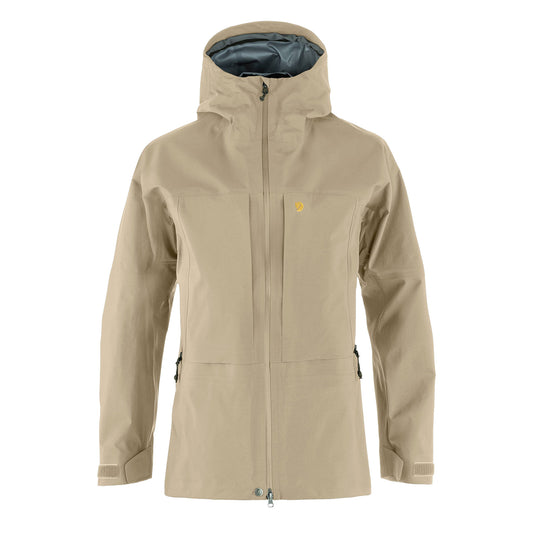
We offer skiwear rental in Chamonix for men, women and children from brands including Patagonia, Fjällräven, Ortovox, Halfdays, Hestra, Rudsak, Houdini and WHITESPACE.
Whether you’re looking for a full outfit or you just need to rent a ski jacket for your Chamonix trip, you can rent it with Cirkel Supply – just remember that outfits book up quickly for peak season, and it's essential to book your rental at least 3 days in advance.
Getting to Chamonix
By train. Chamonix has its own railway – the scenic Mont Blanc Express runs the length of the valley, connecting to the French mainline at Saint-Gervais-les-Bains–Le Fayet. From Paris by TGV, from London by Eurostar with a change – the mountain comes to the railway, not the other way around.

By air. Geneva is the gateway airport – roughly 88 km from Chamonix, with shared and private transfers typically around 1.5 hours. Lyon, Chambéry and Turin (via the Mont Blanc tunnel) are alternative airports.
In the valley. No car needed – valley buses (free with the guest card) and the Mont Blanc Express link all the villages and lift bases. The multi-area layout means you'll move around more than in a single-village resort, but the bus network is efficient and included.
Gillian Rosh’s ‘Insider Tips’ to Chamonix
Rounding off our Guide to Chamonix are a few choice insider tips from our fabulous author and Chamonix resident, Gillian Rosh.
The best boulangerie (bakery) in Chamonix is a much debated topic among the locals. Gillian suggests two options: Chez Richard and l’Al’Pain – both are revered establishments that bring a contemporary twist on traditional French boulangerie and patisserie. If l'Al'pain feels too busy, head down to Boulangerie Au Mont Chou which is owned by the same folks as l'Al'pain.

To find local produce and experience Chamonix's weekly farmer's market, head to the Place du Mont-Blanc on a Saturday morning. For a decent cup of coffee, Moody’s and Shouka are Gillian’s top picks.
If you experience a wave of hunger while sauntering the high street, duck into Breizh cafe for a crepe that will satiate your appetite and ensure that you feel extra-French on your shopping adventure. If this level of Frenchness proves too much for you, Pin Pin will deliver on fantastic sandwiches made with love and homemade sourdough bread.
A big night out can be found on Rue des Moulins - this is also known as the bar street and it can be relied upon for a variety of music, teeming crowds and good vibes. For those looking to dance on tables and enjoy a few beers and live music after skiing, Chambre Neuf is Chamonix’s official après ski institution.
We hope you enjoyed Gillian’s complete guide to Chamonix - let us know if have anything to add to our next installment of Chamonix content.